

Greetings, investors!
It’s been quite a while. So where have I been? (A question you’ve been asking yourself every day, I’m sure.)
Well, it was a very busy start to the year that involved some memorable travel. First, we went to Puerto Vallarta for a resort week with some good friends around the New Year. From there, we crossed the Pacific Ocean for another two weeks in Australia — one week of golf with some buddies, and then a bonus week on my own driving the Great Ocean Road on the southern coast of the continent:

Though it was a truly unforgettable trip, I was away from home for nearly 4 weeks, so I was very happy to return and get settled in our winter home in Florida. It took me several weeks to get caught up on work stuff, but it was well worth it.
Now I’m finally back at my desk, typing furiously, and ready to publish the first Rental Roundup of the year — so let’s get on with it!
Why the proposed ban on institutional homebuying is mostly silly
The Trump administration first proposed the idea of legislation to ban institutional SFR investing back on January 7th, when Trump said this: “I am immediately taking steps to ban large institutional investors from buying more single-family homes, and I will be calling on Congress to codify it.” The stated goal of this effort was to address housing affordability.
Congress took up the call, since the idea has good support on both sides of the aisle. Legislators have been debating the exact structure and language of the bill — called the 21st Century ROAD to Housing Act — for weeks, and the Senate has recently released an updated version that is expect to pass this week and head to the House.
Here’s a summary of what the proposed law would do:
It would ban the purchase of single-family homes by large institutional investors, defined as entities that control 350+ single family homes. They are allowed to keep the homes they purchased before passage of the new law.
It would create several carveouts/exceptions for those entities to acquire properties, specifically properties in build-to-rent developments, or properties that need significant rehab.
In those exception cases, however, the investors would have to sell the properties to smaller/individual owners within 7 years. According to some, this provision would render the exceptions unattractive to builders & developers, and could therefore hurt the build-to-rent home construction pipeline.
The bill will be debated further in the House, and more changes are likely. So we don’t yet know exactly what the final bill will look like, or even if it will become law at all.
Here’s what we do know, though: this law, in whatever form it takes, will have approximately ZERO impact on housing affordability. As I’ve said many times before, institutional investors make easy villains — nobody likes these guys — but they control a tiny sliver of the U.S. housing stock. The bill targets entities that control 350+ single family homes, but those entities together control just 0.7% of the housing supply; 99.3% of homes are NOT owned by these large investors.
This graph tells a similar story that the supply of rental homes are actually dominated by small, mom & pop investors:
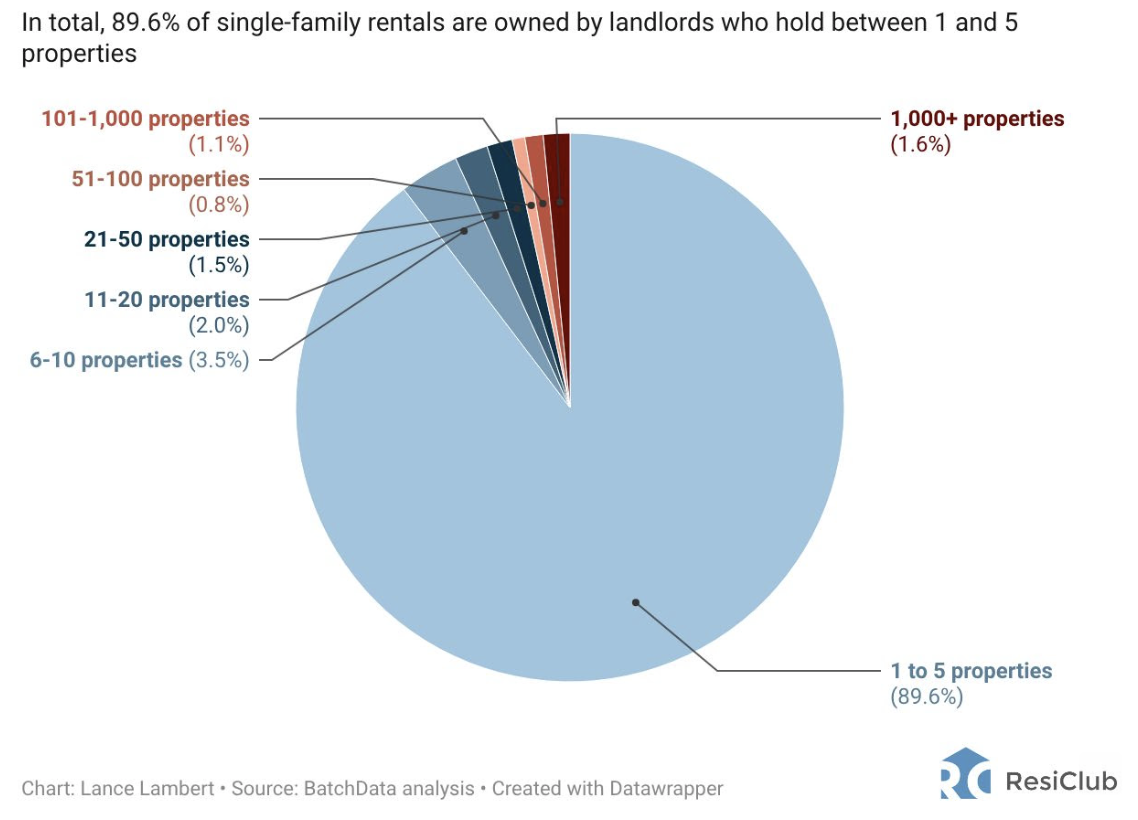
This legislation was doomed to irrelevance from the start, because its proponents mistakenly believe (or are pretending to believe for political reasons) that institutional investors are a major driver of unaffordable housing, when the truth is that they just aren’t.
Real Estate News & Data
The Northeast and Midwest are heating up
ResiClub’s SFR Investor Survey for Q4 was published. Investors in the Northeast and Midwest are feeling better about price and rent momentum than their peers in the South and West, a full reversal of the trends we saw in 2020-2022:
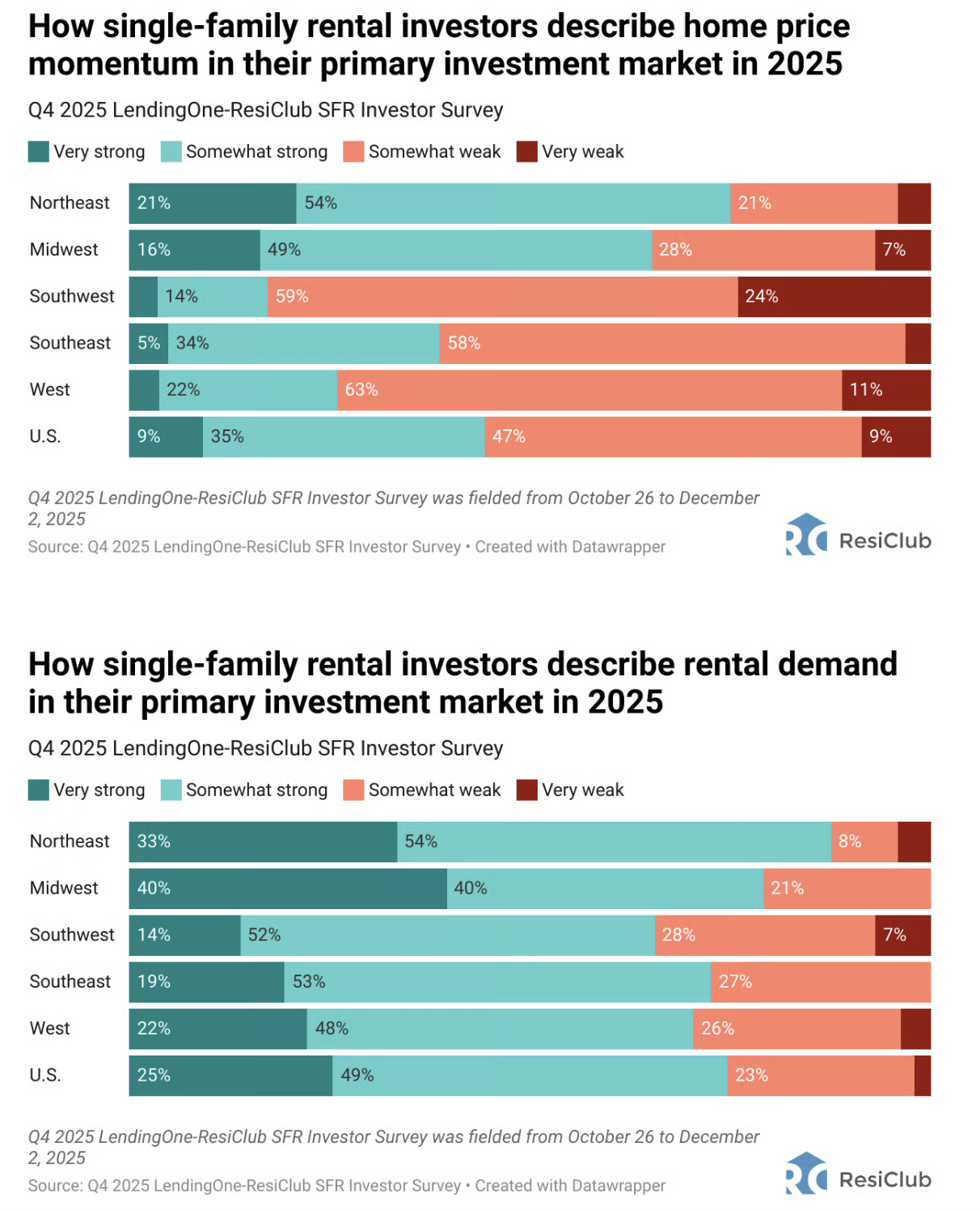
Does this mean investors should shift dollars into these markets? Not really, because these trends change all the time, and are impossible to predict. (Show me the person who predicted that the Sun Belt markets would decline in the last few years vs. Northeast and Midwest markets…don’t remember ANYONE making that case in ~2022/2023.)
Get your own real estate data, EASILY…
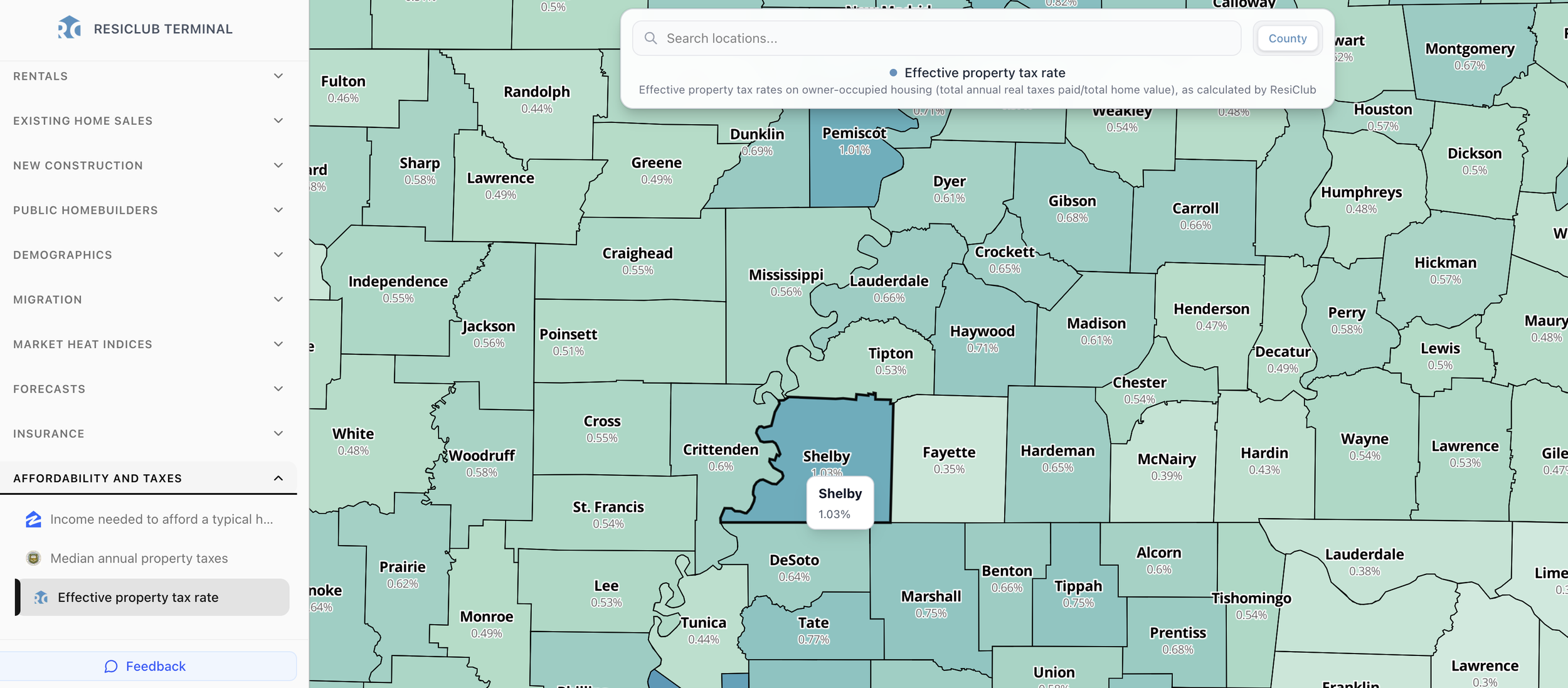
I’ve been using the ResiClub Terminal nonstop the last few months (not an affiliate link, it’s just awesome and I can’t get enough.)
Why? In just a few seconds, you can answer a broad range of important questions about real estate in a highly impactful & visual way. For example — and this is the tip of the iceberg, I promise — what is the average property tax rate by county in the area surrounding my home market of Memphis, TN? Here’s what I found:
The Latest in My Portfolio
I recently published my 2025 Portfolio Report containing all the detailed financial results from my portfolio last year. Here are some of the highlights:
$105K in cash flow, for 9.5% cash-on-cash returns
$58K in maintenance costs, plus $22K in CapEx
95.7% occupancy
2.5% average rent increase YoY
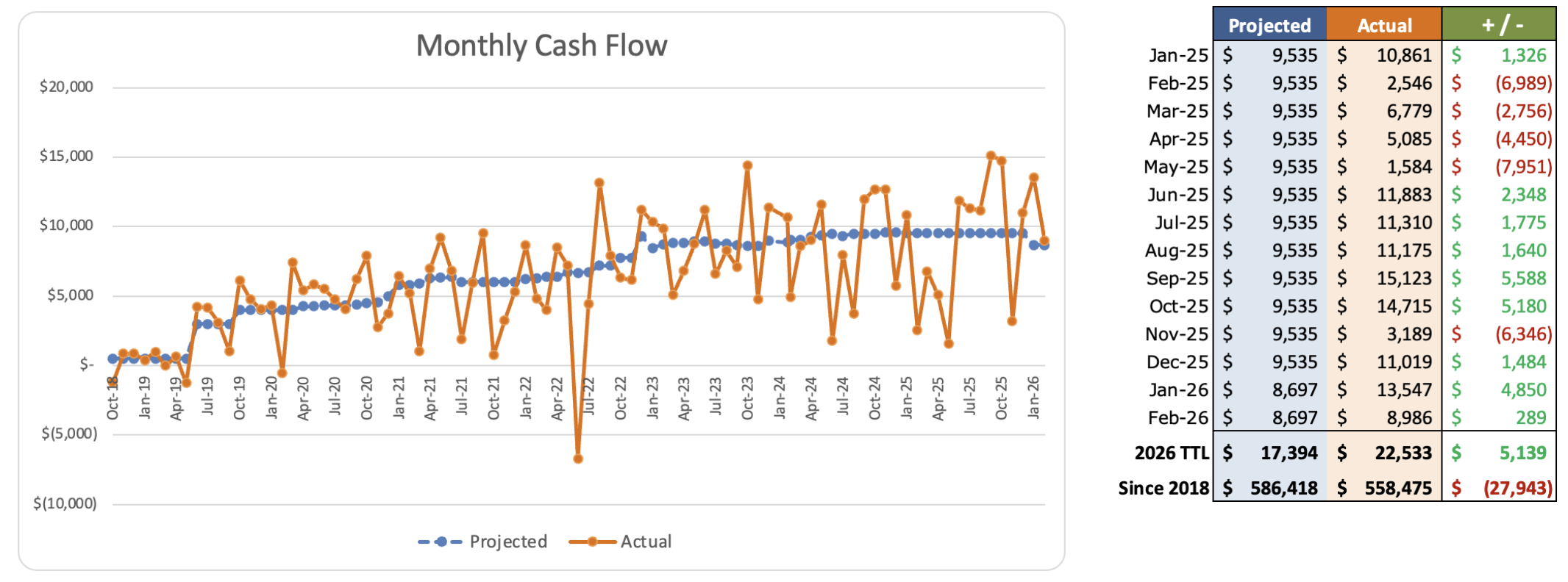
I’ve also updated my portfolio tracking figures through the end of February. I’m currently at 100% occupancy, which is always a great feeling.
But it probably won’t last. ;-)
And now this!
This month’s Roundup is sponsored by Obie.
Obie is a leading online provider of landlord insurance to real estate investors. I’m a fan of Obie because they have the fastest policy quote and binding technology, reducing the need for tedious forms and extended wait times. Their online quote process is incredibly fast and seamless, and lets you tailor your insurance coverage to what you need.
Learn more about Obie here, or get an instant quote.

Well, That’s Interesting…
Section 8 rule changes may be coming
The Dept of Housing & Urban Development proposed rule changes that would significantly tighten eligibility for Section 8 vouchers.
The Trump administration also issued a memo about their push to verify the eligibility of all tenants currently in HUD-funded housing nationwide — including Section 8 tenants — which of course all local housing agencies already do. I predict that in the final tally, fraud and/or ineligible tenants will be a vanishingly small portion of HUD-funded residents.
These developments underscore one of the risks of building your investing strategy on Section 8: the government controls this program, so both funding levels and program rules are always subject to change according to the whims & desires of the party in power.
Eric’s Picks
Eric’s Media Tour: I was quoted in this article about the most affordable Midwestern states for real estate. I was also a guest on this episode of the Investor Fuel Podcast, making the case for a cash-flow-focused approach to rental investing.
Podcast: A year ago, former BiggerPockets CEO Scott Trench made a big bet on real estate — he sold $1M worth of S&P 500 holdings, and put it into rental properties. So…did the bet pay off?
Data Analysis: Rentometer’s Annual 2025 Single-Family Rentals Report was pulished. You’ll find some cool graphs in here, including the Top 10 declining rent cities.
More interesting stuff:
Rent growth has slowed to its lowest rate in 15 years: rents for single-family homes grew just 1.4% since this time last year. In my portfolio, I’ve already planned out my rent increases for next year with my PM, and I’m taking a very cautious approach, including freezing rent for many tenants who are already close to market rates.
Are we less weird than we used to be? This is a fascinating discussion of the convergence and increasing homogeneity of nearly every aspect of life and culture in the modern world.
About the Author
Hi, I’m Eric! I used cash-flowing rental properties to leave my corporate career at age 39. I started Rental Income Advisors in 2020 to help other people achieve their own goals through real estate investing.
My blog focuses on learning & education for new investors, and I make numerous tools & resources available for free, including my industry-leading Rental Property Analyzer.
I also now serve as a coach to dozens of private clients starting their own journeys investing in rental properties, and have helped my clients buy millions of dollars (and counting) in real estate. To chat with me about coaching, schedule a free initial consultation.
Free Rental Property Analyzer
You probably know that a well-designed rental property calculator is the most important tool a real estate investor has. It allows you to quickly calculate key metrics and understand your cash returns on a target property. You can also answer questions like:
How much do your cash-on-cash returns improve if you use a mortgage vs. paying in cash?
What will your average monthly cash flow be?
How will your returns change in future years?
Those questions can be easily answered with side-by-side comparisons in the RIA Property Analyzer. I guarantee this is the best free rental property calculator out there today, and many of my readers have told me the same. It’s both powerful and very simple and intuitive to use. Check it out!








An update on home price trends across the country. Also, tax season is no problem for the rich, and the latest World Happiness Report.